
One part of the Statue has been closed to the public for over a century, and it is not the crown.
About the Statue and its history
This first batch covers the basics: who made it, what it is built from and why it stands where it does. For more depth, see History of the Statue of Liberty and Statue of Liberty facts and curiosities.
Visiting: access, crown and pedestal
Here are the practical questions about what you can climb, how to get there and what to expect on the island. To plan in detail, see How to visit the Statue of Liberty and Statue of Liberty crown: how to climb it. Remember that tickets, hours and rules change: always check the official U.S. National Park Service site and the operators.

Ellis Island, families and tips
Finally, what people usually ask about Ellis Island, visiting with children and saving time. More in Ellis Island: what to see and Statue of Liberty with kids: a family guide.
Tours to visit the Statue of Liberty
Options range from panoramic cruises to guided visits with reserved access. Compare duration, which stops they include and what level of island access they offer before choosing.

Statue of Liberty & Ellis Island Tour with Reserved Ferry Entry
Check availability
Statue of Liberty and Ellis Island Guided Tour with Ferry
Check availability
Circle Line: New York City Statue of Liberty Super Express Cruise
Check availability
NYC City Tour: Statue of Liberty, 9/11 Memorial, Wall Street
Check availability
Private Statue of Liberty and Ellis Island Tour
Check availability
Statue of Liberty and New York City Skyline Sightseeing Cruise
Check availabilityTour titles and descriptions appear as on the booking platform. No tour guarantees a ticket or a specific experience.
See more tours and activities on GetYourGuide →Frequently asked questions
What is the Statue of Liberty?
It is a colossal neoclassical sculpture of a robed and crowned woman on Liberty Island in New York Harbor. It was a gift from the people of France to the United States and has become a symbol of freedom and of welcome to immigrants.
Who designed it and who built the framework?
French sculptor Frédéric Auguste Bartholdi designed the figure, and Gustave Eiffel built its metal framework. Eiffel is the same engineer associated with the famous tower in Paris.
When was it dedicated?
It was dedicated on October 28, 1886, in a ceremony presided over by President Grover Cleveland. Its completion was marked by New York's first ticker-tape parade.
What is it made of?
It is clad in copper over a metal framework. According to the sources, Bartholdi chose copper over bronze or stone for its lower cost, lighter weight and ease of transport, which is why the statue could cross the ocean in crates from France.
How tall is it exactly?
Exact measurements of the figure and pedestal are best checked in official sources, because figures vary depending on whether you count only the statue or the whole monument with its pedestal. What is certain is that its scale is colossal.
What does the tablet in her left hand say?
She carries a tabula ansata inscribed JULY IV MDCCLXXVI, which is July 4, 1776, the date of the U.S. Declaration of Independence. At her feet lie a broken chain and shackle.
Can you climb to the torch?
No. According to the sources, public access to the torch has been barred since 1916. The original torch, which the figure carried from 1886 to 1984, is on display in the island's museum.
Can you climb to the crown?
Yes, but spots are limited, booked in advance, and there are general physical requirements. Check current conditions on the official site before counting on it. More detail in our crown guide.
What is the difference between the pedestal and the crown?
The pedestal gives access to a level along its rim with views, while the crown means climbing inside the figure itself. Both have limited capacity. Check which access your reservation type includes.
How do you get to the island?
Only by ferry. Official boats leave from Battery Park in Manhattan and Liberty State Park in New Jersey. There is no other public way in, and tickets and schedules change, so check ahead.
How long does a visit take?
It depends on what you do. As a very broad guide, the Statue's island can take one to three hours, and Ellis Island about as much. Add waiting to board and security screening, which can stretch the total.
Can you see the Statue for free?
Yes, from several shoreline viewpoints and from the Staten Island Ferry, a public service fare-free since 1997 according to the sources. You see it from a distance without setting foot on the island. We have a guide on this option.
Are there restrooms and food on the island?
Facilities can vary with the season and works. Before you go, check the official U.S. National Park Service site to see what is open and whether to bring water or a snack.
Can I bring a pet?
Rules on animals change and usually have exceptions, such as service animals. Check the current policy of the national parks and the ferry operators before planning your trip.
What is the Statue of Liberty Museum?
It is a museum on the island, opened in 2019, which according to the sources displays the figure's original torch. It helps explain the history and preservation of the monument.
What is Ellis Island and why visit?
It was the busiest immigrant inspection station in the United States. According to the sources, about 12 million people were processed there between 1892 and 1954. Its main building is now a national museum of immigration.
Can I visit both islands in one day?
That is the usual approach: the ferry service typically links both. The key is to start early and not overload the itinerary. There is a full plan in our one-day New York guide.
When is the best time to go?
It depends on your priorities, such as weather, crowds and light. Visitor numbers change with the season and the day of the week. There is more detail in our guide on the best time and hour.
Keep reading

Ferries and boats to the Statue of Liberty: which to choose
Two boats can pass the Statue, and only one lets you step off.
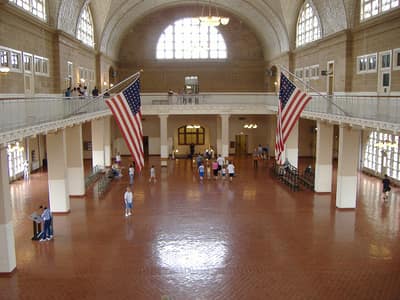
Ellis Island: what to see
An island that is partly New York and partly New Jersey, and almost nobody can say where the line runs.

See the Statue of Liberty for free: the Staten Island Ferry
The boat New Yorkers take to work happens to pass in view of a global icon.
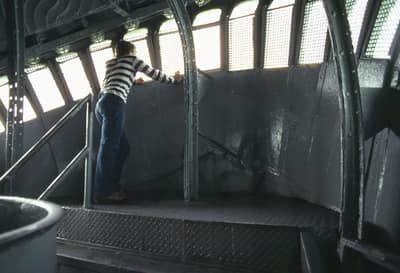
Statue of Liberty crown: how to climb it
The crown is the highest point inside the statue you can still reach, and it is not for everyone.
Sources
Facts taken from Wikipedia and the U.S. National Park Service (public domain). Always verify practical information on the official websites.
Photo credits
- Jyothis at Malayalam Wikipedia, Wikimedia Commons, CC BY-SA 3.0
- Anthony Quintano from Mount Laurel, United States, Wikimedia Commons, CC BY 2.0